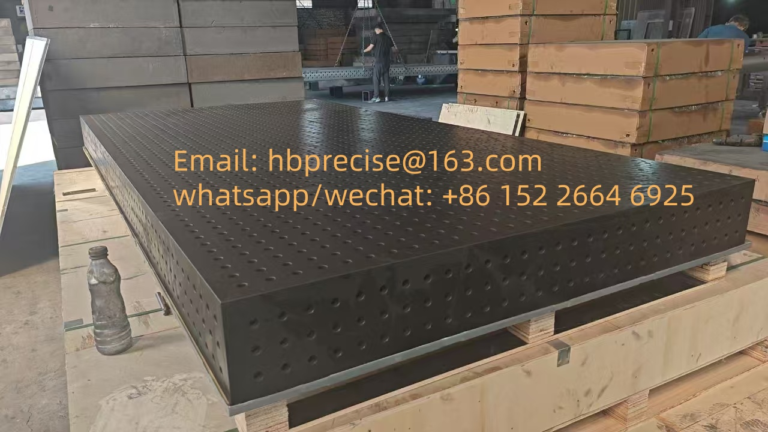
The functions of the clamps
Today, we will introduce the functions of clamps.
There are many types of clamps. The ones currently most commonly used are 180°/90°/45° rubber handle clamps. The advantage of rubber handle clamps is that they have greater friction, making it more convenient to fix the workpiece. Clamps can usually be used alone and do not require any other accessories to be paired with them.
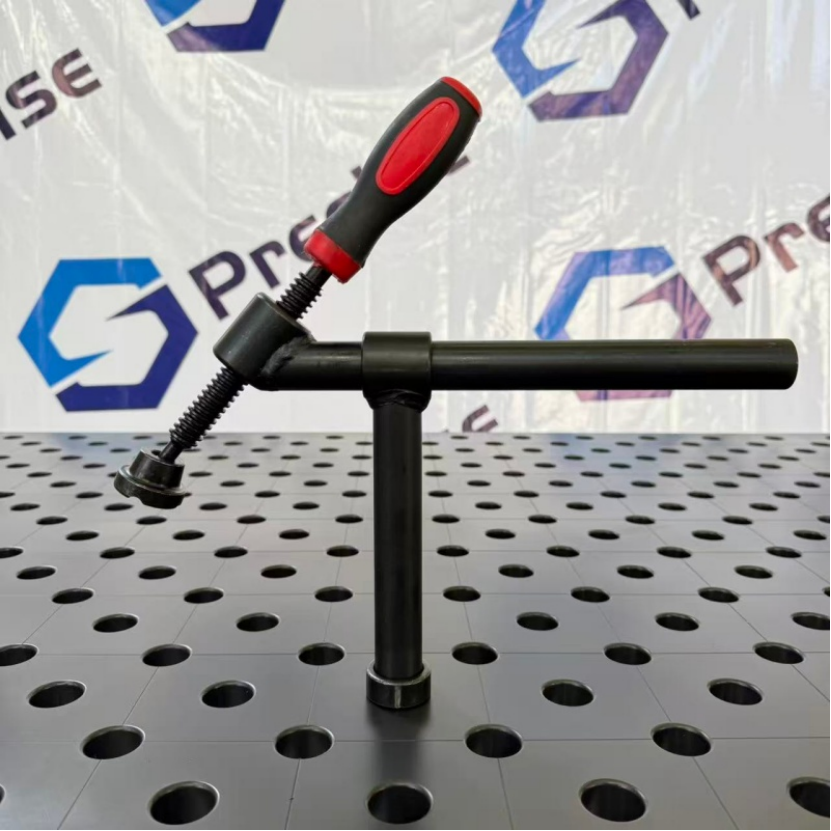
Clamps play a role in 3D welding tables by securely holding and clamping workpieces and parts, providing reliable and appropriately sized clamping force, firmly fixing the workpieces on the positioning elements to prevent welding deformation. For example, clamps can fix positioning squares, leveling rules and other fixtures, and be used in conjunction with the fixtures, or they can directly fix the workpieces.
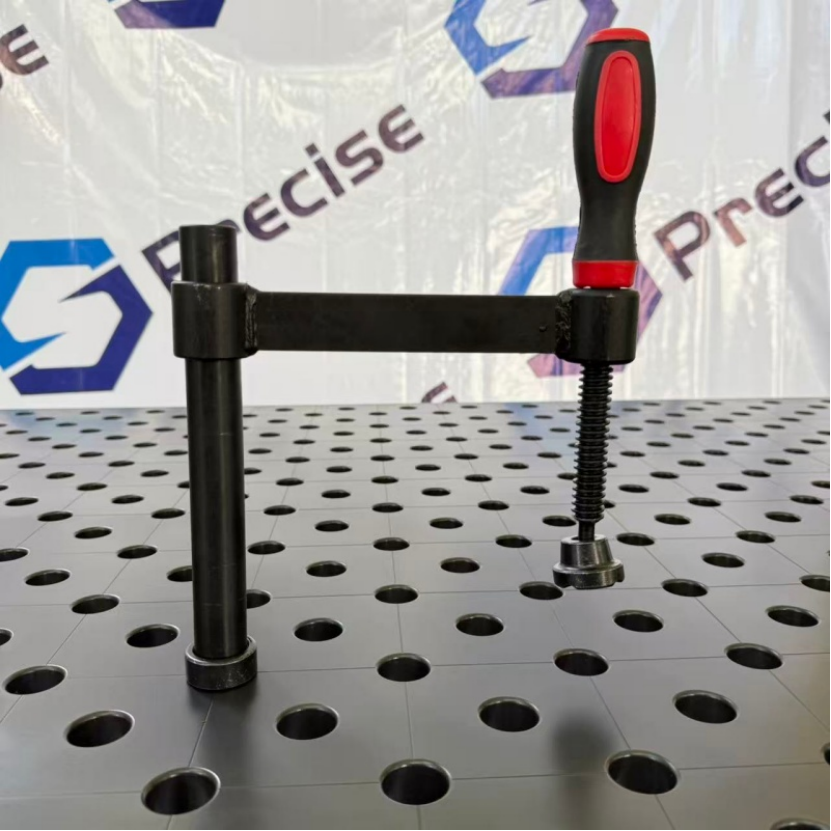
In addition, clamps have many advantages. Firstly, their adjustment range is very wide, allowing for flexible adjustment according to the size of the workpiece. Secondly, the operation is simple; just a gentle rotation is needed to fix the workpiece. Finally, clamps are usually made of high-strength steel, with extremely strong durability, and can withstand various harsh environments.
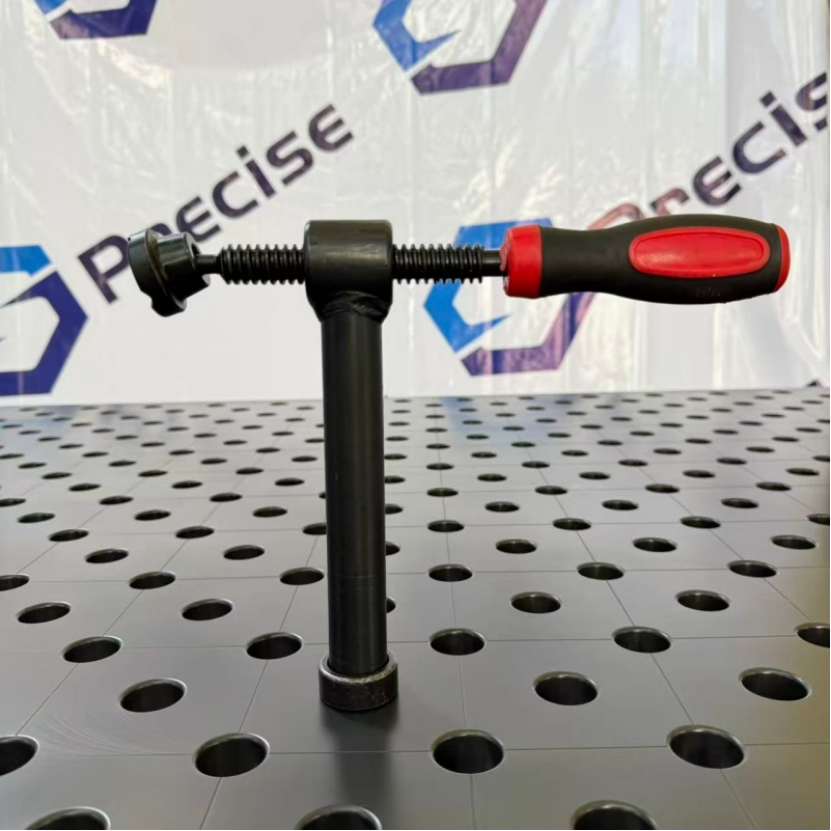
Therefore, clamps can enhance work efficiency and reduce errors, making them indispensable assistants in welding operations.