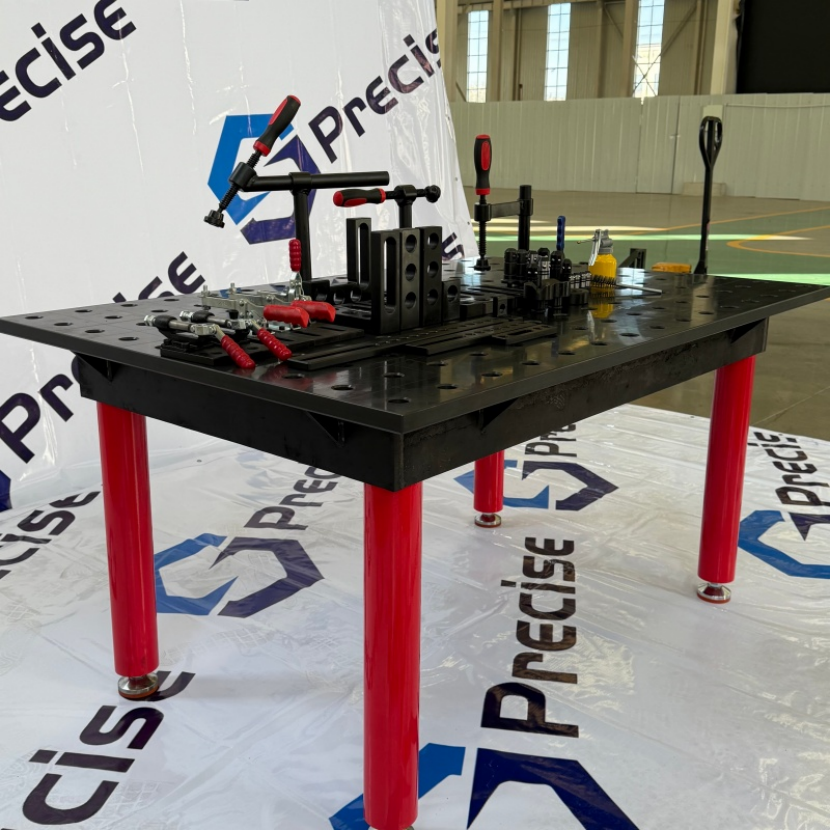
The difference between 2D tables and 3D tables
The difference between 2D and 3D tables can be seen from their names. The most significant difference lies in the visual aspect. A 3D table has five working surfaces, with evenly distributed round holes of 16mm or 28mm in diameter on each surface. The four sides also have certain working surfaces that can be used, making it highly versatile and having a certain thickness. A 2D table is flat and only has one working surface on top, and its thickness is much less than that of a 3D table. A 2D flexible welding table represents three directions, where the general fixtures are longitudinal and transverse without a vertical direction. The large surface of the table has two directions, and the four sides can be used for vertical direction installation, thus achieving a three-dimensional
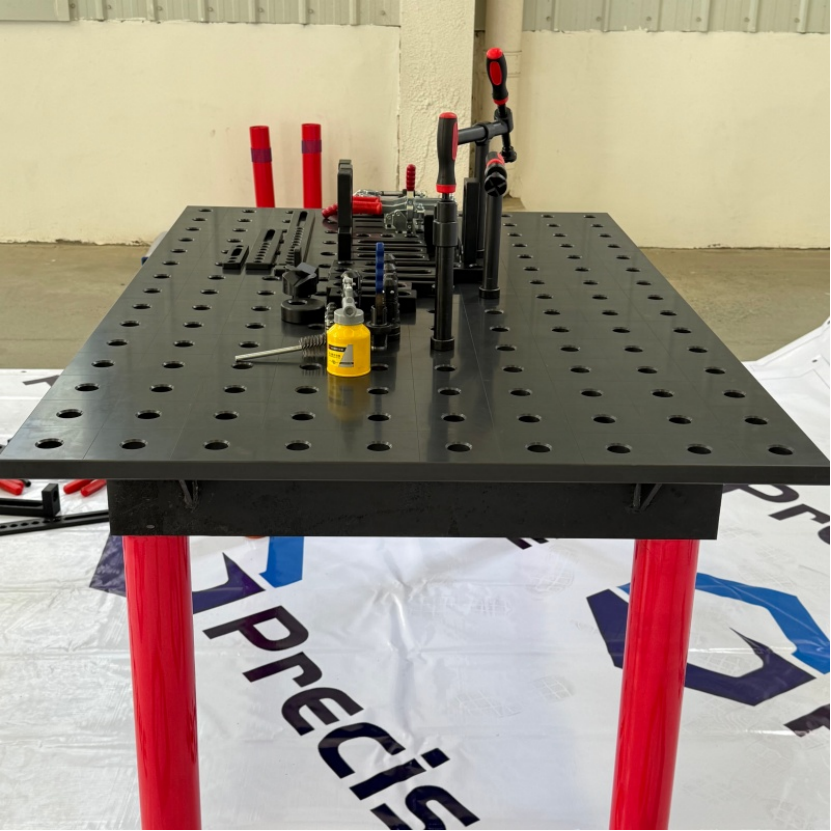
There is not much difference in material between 2D and 3D tables. The commonly used materials are cast steel and cast iron, as well as other composite materials according to requirements. 2D and 3D welding tables are workbenches specially designed for the manufacturing of welded products. They are very convenient, flexible and precise when used in conjunction with jigs and fixtures for welding, and are much more advanced than traditional welding methods.